
Every payment matched, from statement to ledger
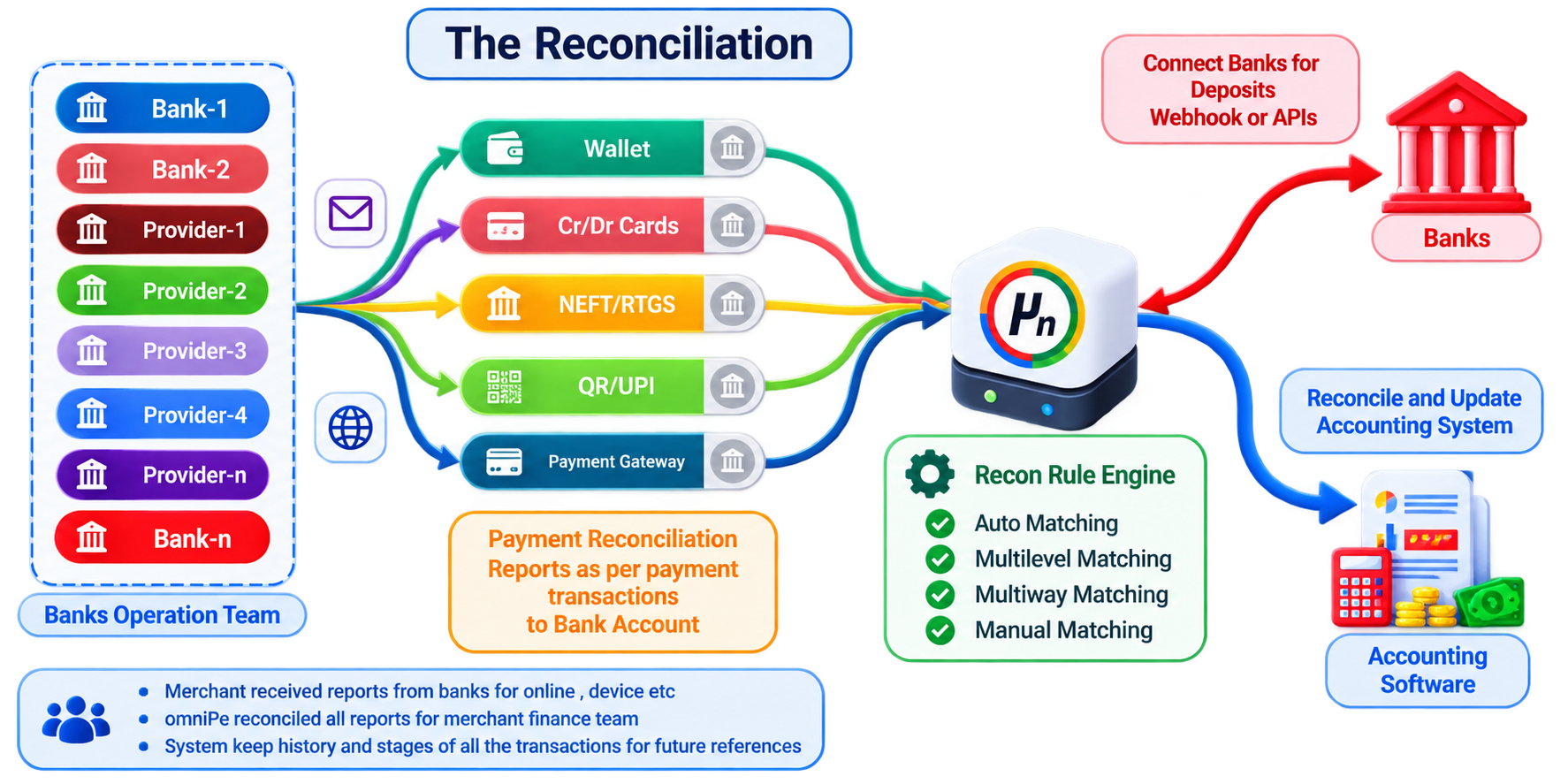
Money leaves the customer on one system and arrives in the bank account on another, days later, under a different reference. momentPay Reconcile closes that gap — ingesting statements from every bank and provider you work with, matching them against your own transaction and billing data, and writing the result into your accounting system.
Reconciliation is where payment operations quietly bleeds
A single day's collection arrives as a dozen files from a dozen sources, in a dozen formats, on a dozen different settlement cycles.
Finance teams bridge that with spreadsheets and manual matching. What does not match inside the month becomes a write-off, and what is disputed becomes a chargeback nobody has the evidence to defend.
Reconcile is provider-agnostic on purpose. It ingests from the banks and providers you already use, whether or not the payment was collected on a momentPay rail.
What gets ingested
Statements and reports arrive by file, webhook or API.
Multiple banks and multiple providers run side by side, each with its own format, settlement cycle and reference scheme.
Four levels of matching, in one pass
Rules escalate from the obvious to the ambiguous, so analysts only ever see what genuinely needs a human decision.
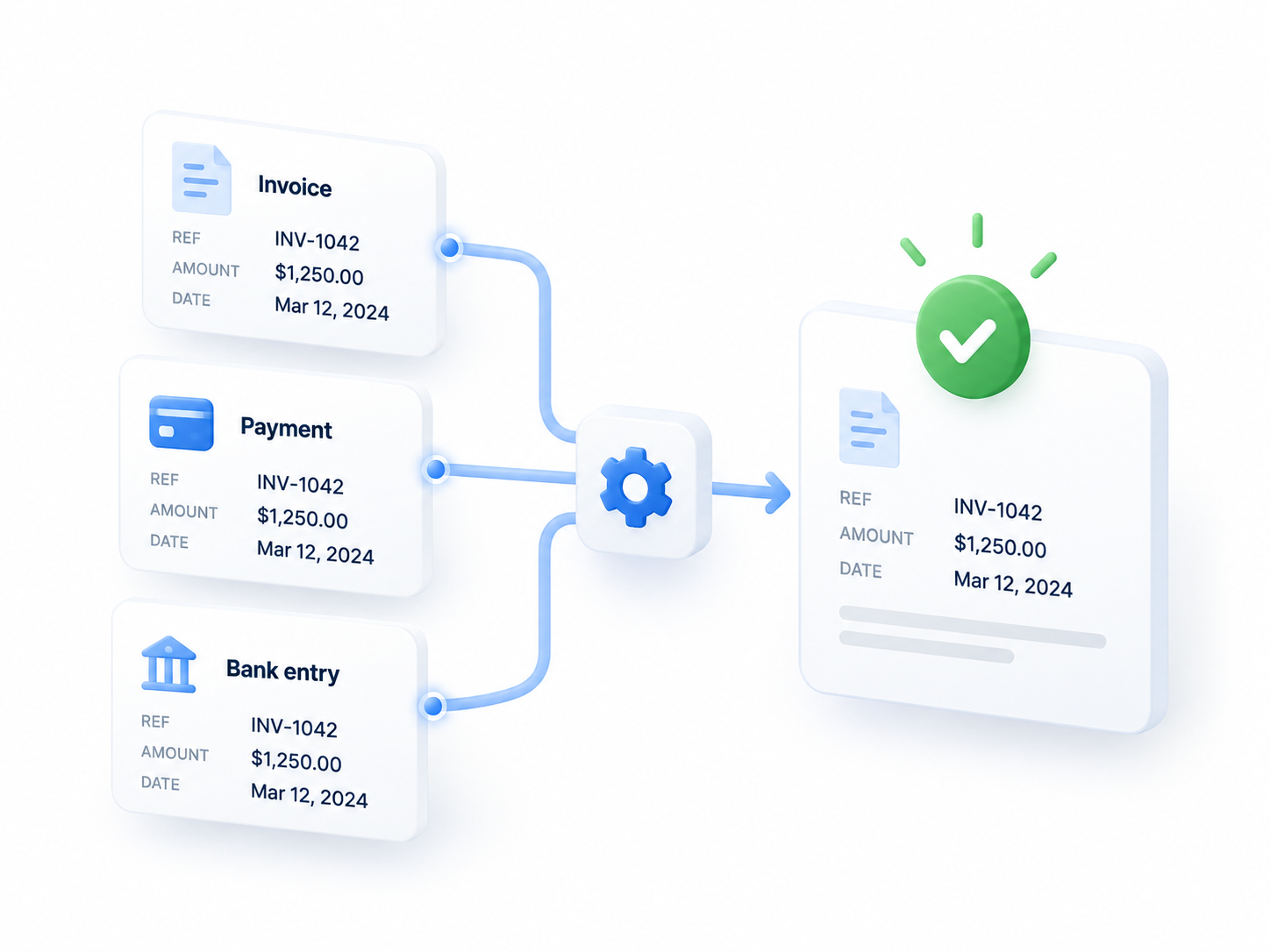 LEVEL 01
Auto matching
Exact matches on reference, amount and date clear automatically with no analyst involvement.
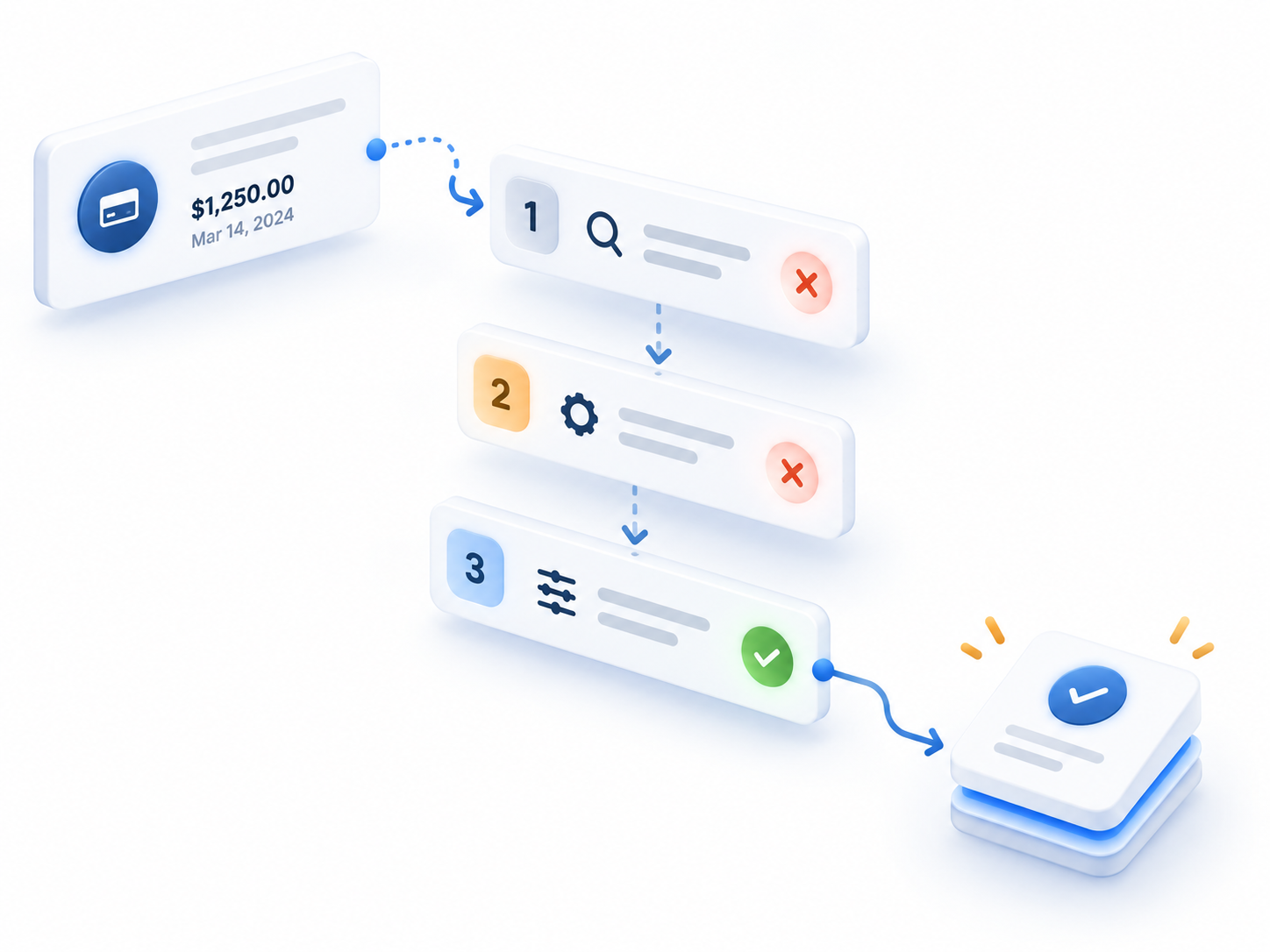 LEVEL 02
Multilevel matching
When a direct match fails, secondary and tertiary rules try alternative keys and tolerances in order.
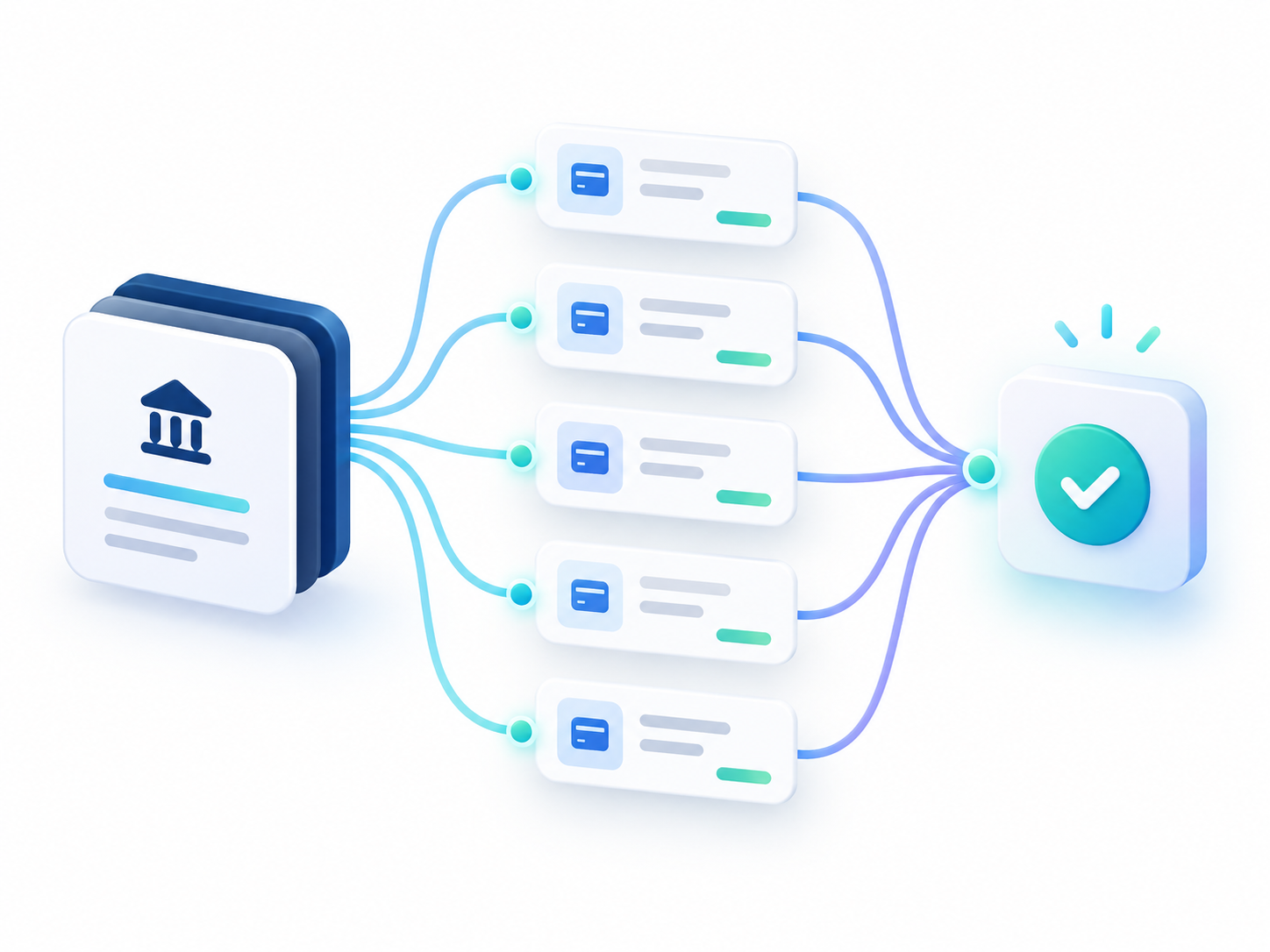 LEVEL 03
Multiway matching
Records spanning several entries on one side, such as a batched settlement against many transactions, resolve as a group.
 LEVEL 04
Manual matching
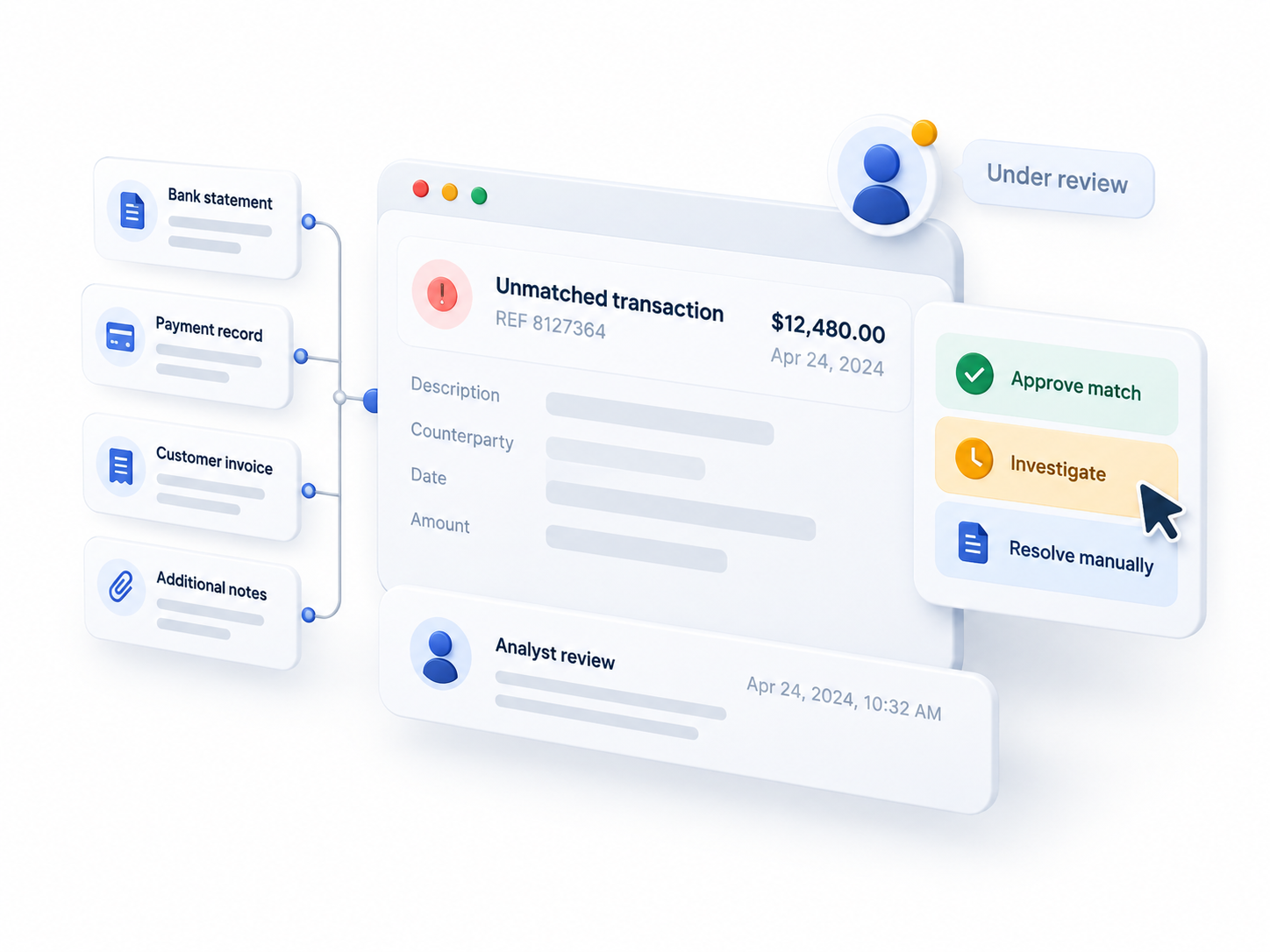
Whatever remains is queued for an analyst with full context attached, and the decision is recorded.
Four-way matching
Matching across all four sides of a transaction, rather than the usual two, is what turns reconciliation from a bank-statement exercise into a control.
- Billing data — what the business invoiced the customer
- Transaction data — what the payment system captured at the counter or checkout
- Payment-provider reports — what the gateway, wallet or scheme says it processed
- Bank deposits — what actually landed in the account, net of charges
| Status | What it means | Action |
|---|---|---|
| Matched | All sides agree within tolerance | Cleared |
| Unmatched | No counterpart found on one or more sides | Investigate |
| Excess | A credit with no corresponding transaction | Review |
| Short | Settled below the expected amount | Investigate |
Every row keeps its full history and stage transitions for later reference and audit.
Where the matched result goes

Reconciliation reports
Reports per payment transaction against the bank account, grouped by provider, merchant and settlement cycle.

Accounting write-back
Matched entries post into the accounting system, so the ledger reflects settled reality rather than expected receipts.

Full history
Every transaction's stages and matching decisions are retained, so a query months later has an answer.
Two teams, one source of truth
Bank operations teams
Merchants receive reports from banks for online and device transactions. Reconcile brings every one of those reports into a single reconciled view.
- Multiple acquiring relationships reconciled side by side
- Settlement tracking and exception flagging before a cycle closes
- Evidence retained for dispute and chargeback defence
Merchant finance teams
The finance team stops rebuilding the same spreadsheet every month and works only the exceptions that matter.
- Fewer manual write-offs at month end
- Collections traced from invoice through to deposited funds
- Clean handoff into the accounting system
Stronger with Collect, useful without it
Reconcile works as a standalone product against whatever rails you run today. It goes further when the capture side is also momentPay.
- Standalone. Point it at your existing banks, gateways and billing exports. Nothing else needs to change.
- With momentPay Collect. The billing-side record arrives automatically, which is what makes genuine four-way matching possible rather than two-way.
- With momentPay Acquiring. Settlement records are grouped by network, merchant and cycle before they reach reconciliation.
Configurable rules
Matching keys, tolerances and escalation order are configured per source, not hardcoded.
Any format
Bank and provider files ingest in their native layouts, however each one chooses to report.
Exception workflow
Unmatched and excess rows route to the right team with the context needed to resolve them.
Audit trail
Every automatic and manual matching decision is recorded against the transaction.
Bring us one month of real files
Send a month of bank statements, provider reports and billing data. We will run them through the engine and show you what matches, what does not, and what it is costing you today.